Last Updated: October 27, 2026
Quick Summary
Telepsychiatry services in San Antonio improve access to mental health care across a large city, cut travel time and transportation barriers, and offer greater privacy and comfort during appointments. They also reduce stigma, strengthen continuity of care and follow-up, and shorten wait times while lowering missed appointments.
- Virtual visits remove the geography problem, widening the pool of available clinicians beyond near me.
- Join from a closed room with headphones and confirm the platform is a secure, HIPAA-compliant video service.
- Ask whether you will be matched with one named clinician and how coverage works when they are unavailable.
- Verify with your insurer whether the practice is in-network with your specific plan before your first visit.
- Salado Creek Mental Health has five providers with their own specialties and can usually get new patients in within a few days.
Table of Contents
- Why Telepsychiatry Services Are Reshaping Care in San Antonio
- 1. Improved Access to Mental Health Care Across the City
- 2. Less Travel Time and Fewer Transportation Barriers
- 3. Greater Privacy and Comfort During Appointments
- 4. Reduced Stigma and Fear of Judgment
- 5. Stronger Continuity of Care and Follow-Up
- 6. Shorter Wait Times and Fewer Missed Appointments
- Telepsychiatry vs In-Person Psychiatry: Which Fits Your Needs
- Frequently Asked Questions
Why Telepsychiatry Services Are Reshaping Care in San Antonio
Telepsychiatry services are psychiatric evaluations, medication management, and follow-up care delivered through secure video visits instead of an office. A recent American Psychiatric Association overview of telepsychiatry notes that virtual care has become a standard delivery model for psychiatric treatment, not a temporary workaround.
Here is the honest version. Telepsychiatry is not right for every person or every situation. But for a lot of people in this city, it solves problems that in-person care cannot.
Below, we break down seven benefits and then explain who should choose which format. You can also review the practice’s telehealth options for specialized psychiatric care to see the full range of virtual services offered.
1. Improved Access to Mental Health Care Across the City
The clearest benefit is simple: more people can get seen. San Antonio stretches across a large area, and a psychiatrist’s office is convenient for only a fraction of residents. Virtual visits remove the geography problem entirely.
That matters most for people who struggle to find a local provider with openings, and for anyone in a household without reliable transportation. When care comes to a screen, the pool of available clinicians widens from “near me” to “licensed to treat me.”
A common mistake is assuming virtual care means lower-quality care. It does not. The same evaluation, the same diagnostic process, and the same prescribing standards apply.
2. Less Travel Time and Fewer Transportation Barriers
Travel is the quiet cost of in-person psychiatry. A 30-minute appointment can mean two hours of driving, parking, and waiting. Virtual visits cut that to the appointment itself.
For patients without a car, or those who depend on rides, this is not a small convenience. It is the difference between keeping appointments and missing them. Parents managing childcare and shift workers protecting limited time off benefit the same way.
We offer after-hours Spravato services.
3. Greater Privacy and Comfort During Appointments
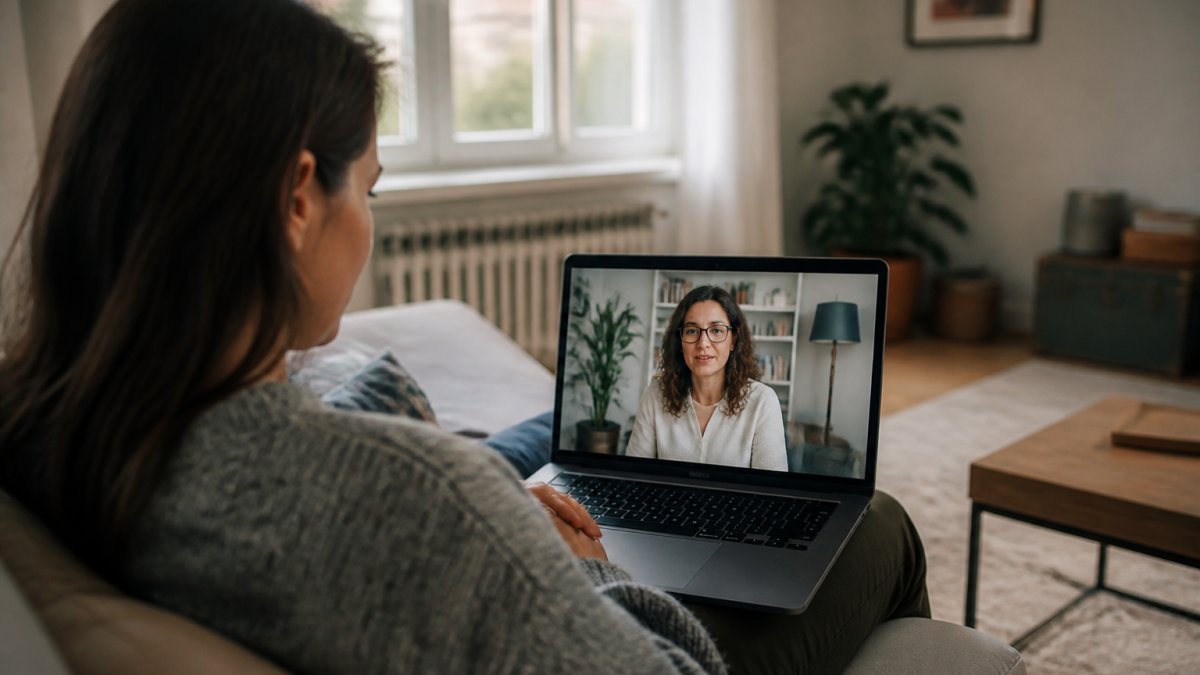
Privacy works differently online, and often better. There is no waiting room, no chance of running into a neighbor, and no shared parking lot. You choose the room.
Many patients open up more when they are on their own turf. That comfort can improve the quality of the conversation, which is the whole point of a psychiatric evaluation.
One caution: use a private space and headphones, and confirm your platform is secure before the visit. A parked car in a busy lot is not a private setting.
4. Reduced Stigma and Fear of Judgment
Stigma keeps people out of care. Walking into a mental health clinic can feel exposing, especially in a close-knit community or a workplace where everyone knows everyone. Virtual visits lower that barrier in ways that are concrete rather than abstract.
The exposure mechanics are different online. There is no lobby, no sign-in sheet, no chance of crossing paths with a coworker in the parking garage. Nobody sees you arrive. Nobody asks why you are there. For first responders, healthcare workers, teachers, clergy, and members of the LGBTQIA community who have had poor experiences with providers, that anonymity can be the push that finally gets them to schedule.
The stigma does not disappear. The exposure does.
Privacy is not automatic, though. The privacy of a virtual visit depends on the room you join from. A few practical habits make the difference:
- Join from a closed room, not a shared living space or a parked car in a busy lot.
- Use headphones so the conversation is not overheard.
- Confirm the platform is a secure, HIPAA-compliant video service before the visit, not a consumer chat app.
- Tell household members you need 45 uninterrupted minutes, the same as you would for any medical appointment.
If privacy at home is the barrier, ask about scheduling during a lunch break from a private office, or a visit from a parked car in a quiet location with headphones. Many patients use a scheduled visit as their protected hour.
A note on records and confidentiality. Psychiatric records carry extra protection under federal rules, and virtual visits do not change that. Ask your practice how visit notes are stored, who can see them, and how they handle requests from employers or family members. A good practice will answer plainly.
Stigma also shows up as self-judgment. Some patients worry that virtual care is “not real” care, or that needing help at all is a weakness. The honest framing: telepsychiatry is the same evaluation, the same diagnostic process, and the same prescribing standards as an in-office visit. The format changes; the medicine does not.
If fear of being seen is what has kept you from booking, that is worth naming in the first visit. A clinician who hears it can help you build a plan that protects your privacy without delaying treatment.
5. Stronger Continuity of Care and Follow-Up
Continuity of care is the practice of keeping the same provider and treatment plan across visits, and telepsychiatry makes it easier to maintain. Missed appointments break continuity. Virtual visits are easier to keep, so follow-up actually happens.
That consistency matters for medication management, where timing and monitoring drive results. It matters just as much for therapy-adjacent check-ins and for adjusting a plan when something is not working. Patients who move within the region, travel for work, or split time between households can stay with the same provider instead of starting over.
What continuity looks like in practice. A well-run virtual practice builds follow-up into the schedule rather than leaving it to chance:
- Standing follow-up intervals. Medication checks are typically scheduled every few weeks at first, then stretched as you stabilize. Ask what the expected cadence is for your situation.
- Between-visit communication. Confirm how to reach the practice for refill questions, side effects, or scheduling changes, and what response time to expect.
- Records that travel with you. If you switch providers or move, ask how records are transferred and whether your new clinician can see prior notes and medication history.
- A named clinician. Continuity is strongest when you see the same provider across visits rather than a rotating pool. Ask whether you will be matched with one clinician and how coverage works when they are unavailable.
Insurance and payment continuity. Coverage questions are one of the most common reasons patients delay follow-up. Before your first visit, verify:
- Whether the practice is in-network with your specific plan, not just the insurer.
- Your copay or coinsurance for psychiatric visits, and whether it differs for medication management versus therapy.
- Whether your deductible applies and how much remains.
- Whether prior authorization is required for any medication your clinician may prescribe.
- What the self-pay rate is if you choose not to use insurance.
Telehealth coverage rules can vary by plan and change between plan years. Confirm benefits directly with your insurer before your appointment so a billing surprise does not interrupt treatment.
Emergency planning is part of continuity. Virtual care is not a crisis service. Ask your clinician to document a crisis plan during a routine visit: who to call, where to go, and what to do after hours. In a mental health emergency, call or text 988 or go to the nearest emergency room. Having that plan on file before you need it is one of the most practical continuity steps a patient can take.
At Salado Creek Mental Health, we can typically get new patients in within a few days. We have five providers, each with their own specialties, so you are matched to the right clinician rather than the next open slot. We also accept most commercial insurance, and a complimentary brief phone consultation lets you confirm fit before committing. If you are weighing options, our guide on how to find psychiatrists accepting new patients walks through what to ask.
6. Shorter Wait Times and Fewer Missed Appointments
Availability is where virtual care pulls ahead. When a practice runs virtual visits, it can offer more appointment slots and fill cancellations faster. Patients get in sooner.
Missed appointments drop too. A no-show that costs an hour of driving is easy to skip; a visit you join from your kitchen is not.
At Salado Creek Mental Health, we can typically get new patients in within a few days. We have five providers, each with their own specialties, so you are matched to the right clinician rather than the next open slot. We also accept most commercial insurance, and a complimentary brief phone consultation lets you confirm fit before committing. If you are weighing options, our guide on how to find psychiatrists accepting new patients walks through what to ask.
Telepsychiatry vs In-Person Psychiatry: Which Fits Your Needs
The answer depends on your situation, not on which format is trending. Use this comparison as a starting point.
| Factor | Telepsychiatry | In-Person Psychiatry |
|---|---|---|
| Best for | Follow-up visits, medication checks, busy schedules | First evaluations, complex symptoms, physical exams |
| Travel | None | Drive, parking, wait time |
| Privacy | High, you choose the room | Shared waiting area |
| Availability | More slots, faster scheduling | Limited by office hours |
| Technology | Needs stable internet and a private space | None required |
| Emergency care | Not suitable for crises | Not a crisis service either |
Choose virtual care if you are stable, need regular follow-up, or face travel and scheduling barriers. Choose in-person if you are starting treatment, have symptoms that need close physical assessment, or simply prefer being in the room. Many patients use both. Our article on how patient-centered care works in psychiatry explains how a plan can blend the two, and our patient guide to psychiatric care in San Antonio covers what to expect from a local practice. If you are new to virtual visits, read how to prepare for your first psychiatric appointment so the first session runs smoothly.
One rule applies to both formats: neither is an emergency service. If you are in crisis, call or text 988 or go to the nearest emergency room.
Finding a psychiatrist who has openings, takes your insurance, and actually listens should not take months. At Salado Creek Mental Health, we offer patient-centered psychiatric care for adolescents and adults ages 10 to 65, with five providers covering different specialties, complimentary brief phone consultations, and after-hours Spravato services. We accept most commercial insurance and can usually get new patients in within a few days. Get started with Salado Creek Mental Health and book a consultation.
Frequently Asked Questions
Is telemedicine legal in Texas?
Telemedicine and telepsychiatry are available in Texas. Check official Texas sources for current requirements, and confirm details with the provider before booking.
Does insurance cover telepsychiatry services?
Coverage and out-of-pocket costs vary by plan. Ask your insurer whether the provider is in network and what your costs will be. Salado Creek Mental Health accepts most commercial insurances, and offers complimentary brief phone consultations.
How do I prepare for a telepsychiatry appointment?
Pick a private room with a reliable internet connection and a charged device. Have your insurance card, a list of current medications, and any recent lab work nearby. Write down your symptoms, when they started, and what you want to address. Test your camera and microphone a few minutes early, and keep a pen handy for notes. A short list of questions helps you use the full visit well.
Can a psychiatrist diagnose and treat you through telehealth?
Whether evaluation, diagnosis, treatment planning, or prescribing can be done through telehealth depends on the circumstances. Ask a qualified professional whether telehealth is appropriate for your needs.