
Table of Contents
- How Long Does Ketamine Work for Depression? The Short Answer
- What Determines How Long Ketamine Relief Lasts
- How Many Ketamine Treatments Are Needed for Lasting Results?
- Building a Ketamine Infusion Maintenance Schedule
- Spravato Therapy for Treatment-Resistant Depression: What to Expect
- Making Results Last: Integration and Lifestyle Support
- Is Ketamine a Cure? Setting Realistic Expectations
- Find Out If Ketamine Therapy Is Right for You
- Frequently Asked Questions
Last Updated: September 4, 2026
How Long Does Ketamine Work for Depression? The Short Answer
For patients asking how long does ketamine work for depression, the direct answer is that a single treatment session typically provides relief lasting several days to a few weeks, while a full course of treatment can produce benefits that endure for months.
Ketamine represents a genuine shift from conventional antidepressants, which often take weeks to build effect. The drug targets the brain’s glutamate system rather than serotonin or norepinephrine, which matters for the estimated one-third of people with depression who do not respond to standard oral medications (peer-reviewed research).
Ketamine is not a permanent cure, but a powerful tool for creating a window of relief. The goal of a full treatment protocol is to extend that window into lasting mood stability.
What Determines How Long Ketamine Relief Lasts
Several factors influence the duration of symptom relief after ketamine therapy, including the specific condition being treated, the dosage administered, the route of delivery, and the individual’s unique brain chemistry. Because ketamine is delivered in a clinical setting as an intravenous infusion or as the FDA-approved nasal spray esketamine, sold under the brand name Spravato, the treatment protocol is carefully tailored to each patient.
Intravenous infusion offers precise control over dosing and is the most studied form of ketamine for depression. Spravato therapy for treatment resistant depression offers a structured, in-clinic option that requires monitoring after each dose. Both approaches produce the rapid-acting antidepressant effect ketamine is known for, but the experience and scheduling differ.
The Induction Phase vs. the Maintenance Phase
Ketamine treatment is divided into two distinct phases. The induction phase is the initial period where treatments are scheduled close together, often two to three times per week, to quickly pull a patient out of a severe depressive episode. Most patients notice a therapeutic response within the first few sessions, though the response is highly individual.
Once a patient achieves meaningful symptom relief, care shifts to the maintenance phase. Patients transition to a schedule of maintenance infusions spaced weeks or even months apart, based on how long their symptom relief tends to last. The goal is to find the longest interval that keeps the depression at bay, which is why your treatment team will ask you to track your mood carefully between sessions.
How Many Ketamine Treatments Are Needed for Lasting Results?
There is no universal answer to how many ketamine treatments are needed, but most clinical protocols follow a similar trajectory. The typical induction series involves six infusions delivered over two to three weeks, designed to achieve what researchers call neuroplasticity, the brain’s ability to form new neural connections, which is believed to be the foundation of ketamine’s antidepressant effect (PubMed).
After the induction series, clinicians evaluate the patient’s response. Some patients experience full remission after six treatments; others may see partial improvement and require additional sessions to reach a stable baseline.
The number of treatments needed also depends on the severity and chronicity of the illness. Patients who have struggled with depression for years, or who have tried many failed medications, may need a longer induction period.
Building a Ketamine Infusion Maintenance Schedule
Once the induction phase succeeds, the focus shifts from achieving relief to sustaining it. Unlike the fixed induction protocol, the maintenance phase is a period of careful calibration. The goal is to find the longest interval between treatments that keeps your symptoms from returning, and that interval is unique to you.
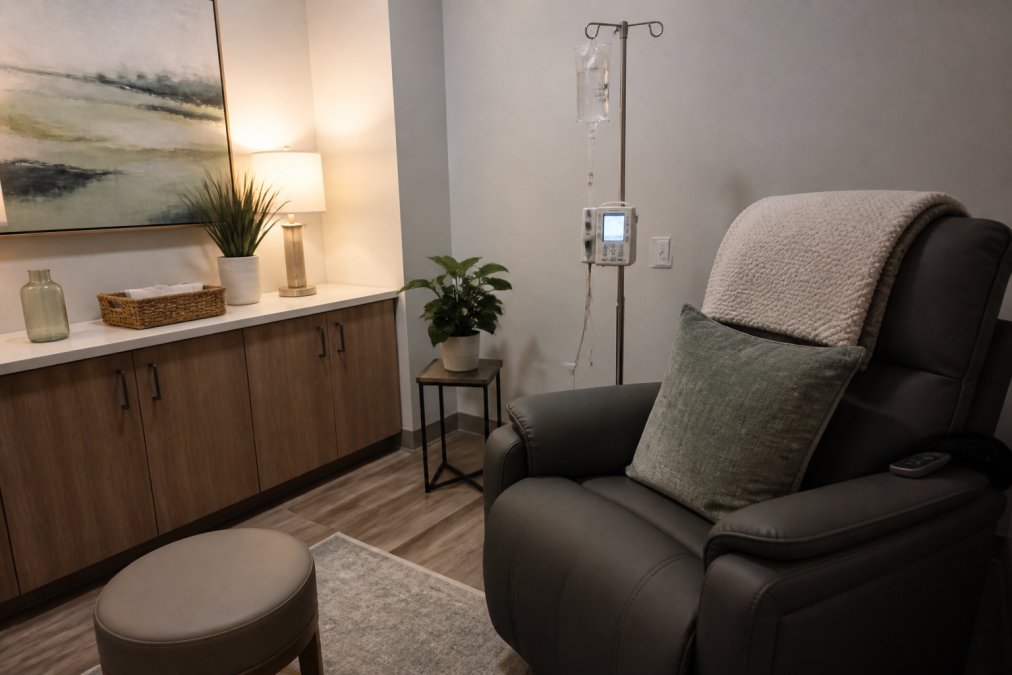
The Transition from Induction to Maintenance
The transition is rarely a clean switch. After completing the initial six-infusion induction series, most clinicians use a tapering approach rather than immediately jumping to a long interval. A common pattern is to schedule a seventh infusion one week after the sixth, then a follow-up two weeks later, and then assess. This transition period is diagnostic: it tells your clinician how quickly your symptoms begin to creep back without frequent dosing.
During this phase, you will be asked to track your mood daily. A simple 1-to-10 scale, noting your energy, sleep quality, and motivation, is often more useful than a vague journal entry. The pattern that emerges, whether you feel a dip at day 10 or day 25, directly informs your maintenance interval.
Typical Maintenance Frequencies: A Patient-Reported Roadmap
While there is no standardized national schedule, clinical experience and patient-reported patterns cluster around a few common intervals. The table below is a practical roadmap, not a prescription. Your clinician will adjust based on your response.
| Maintenance Interval | Typical Patient Profile | What It Indicates |
|---|---|---|
| Every 2-3 weeks | Patients with rapid relapse after infusion | High symptom burden or complex, chronic depression; may need more intensive concurrent therapy |
| Every 4-6 weeks | The most common maintenance cadence | A stable response where the drug’s neuroplastic effects last roughly a month |
| Every 8-12 weeks | Patients in sustained remission | The brain has built enough new neural pathways that support is needed less frequently |
Most patients will need at least one schedule adjustment in the first year. If you find yourself counting the days until your next infusion, that is not a failure, it is data your clinician needs to shorten the interval. Conversely, if you forget you have an appointment coming up, it may be time to stretch the interval.
The “Booster” Mindset vs. The “Prevention” Mindset
A critical shift in thinking separates patients who do well on maintenance from those who struggle. Early on, patients often treat a maintenance infusion as a “booster”, a rescue intervention they seek out when they feel a depressive episode starting. This is reactive and often means you are treating a relapse rather than preventing one.
The more effective approach is preventive. Once you and your clinician identify your typical duration of relief, you schedule the next infusion before you expect symptoms to return. This proactive scheduling keeps your mood stable and makes the treatment feel less like a crisis intervention and more like routine disease management.
When to Re-Evaluate the Schedule
Your maintenance schedule is not static. It should be re-evaluated at least every six months. Some patients find that after a year of stable maintenance, they can extend intervals significantly. Others find that a stressful life event, a loss, a job change, a major move, temporarily requires more frequent sessions. Treat the schedule as a living document that responds to your life circumstances.
Do not unilaterally extend your maintenance interval without consulting your clinician. If you feel stable and want to try a longer gap, discuss it first. A sudden relapse can be more destabilizing than the inconvenience of a scheduled infusion.
The Role of Concurrent Care in Lengthening Intervals
The single biggest factor that allows patients to stretch their maintenance intervals is the quality of their concurrent care. Ketamine opens the window of neuroplasticity, but therapy, exercise, and sleep hygiene determine how much structural change occurs inside that window. Patients who pair maintenance infusions with regular psychotherapy, particularly cognitive behavioral therapy or acceptance and commitment therapy, often find they need fewer infusions over time.
Spravato Therapy for Treatment-Resistant Depression: What to Expect
Spravato therapy for treatment resistant depression offers a structured alternative to IV ketamine that has been cleared by the FDA for this specific diagnosis. Spravato is a nasal spray containing esketamine, a closely related compound to ketamine, and it is designed to be administered only in a certified medical office where the patient can be monitored. This setting is non-negotiable because of the dissociative effects and potential for sedation that can occur during and shortly after administration.
A single Spravato session involves self-administering the spray under nursing supervision, followed by a two-hour observation period (the FDA). Patients are not allowed to drive home after their appointment. The treatment frequency mirrors the ketamine protocol: twice weekly for the first month, then weekly for the second month, before transitioning to a maintenance schedule of every one to two weeks.
The clinical outcomes for Spravato are promising, particularly for those who have not found relief elsewhere. Research has demonstrated meaningful improvement in depressive symptoms for a significant portion of patients with treatment-resistant depression. However, the requirement for in-clinic monitoring and the fixed dosing schedule means it requires a genuine commitment of time and transportation.
Making Results Last: Integration and Lifestyle Support
The most significant mistake patients make is treating ketamine as a passive treatment, expecting the infusion to do all the work. The drug creates the neurological window, but what you do inside that window determines how long the relief lasts. Post-infusion integration, actively building healthier patterns while your brain is most malleable, is essential for long-term efficacy.
The 72-Hour Integration Window: What to Do and When
The period immediately following an infusion is when your brain’s default mode network is most disrupted and neuroplasticity is at its peak. This window, typically the 48 to 72 hours after a session, is your opportunity to encode new patterns. Here is a practical guide to making the most of it:
Day 1 (Infusion Day + 24 hours): Rest and reflect. The dissociative effects have worn off, but your brain is still settling. Avoid heavy decision-making, intense work deadlines, or conflict. Instead, engage in gentle reflection. Write down three things you noticed about your mood or thought patterns during the infusion.
Day 2 (24-48 hours post-infusion): This is the prime window for active integration. Schedule a therapy session if possible. If you are not in regular therapy, this is the day to use a structured workbook or guided journaling prompt. Focus on one specific behavioral change you want to make, whether it is a morning walk, a phone call you have been avoiding, or a meal-prep routine.
Day 3 (48-72 hours post-infusion): Begin to re-engage with your normal routine, but deliberately. The goal is to carry the new perspective into your regular life. If you felt more patient or less reactive during the first two days, consciously practice that patience in a real-world setting. This is the day to re-establish your exercise routine, even if it is a lighter version than usual.
Create a “post-infusion integration plan” with your clinician before your session. Decide in advance what therapy topic you will address, what behavioral experiment you will try, and what your exercise goal is for the 72 hours after. Having a plan removes the friction of deciding what to do when your brain is still recalibrating.
The Financial and Insurance Navigation Gap
One of the most under-discussed aspects of making ketamine treatment last is the financial logistics of maintenance. If you are planning for a maintenance phase that lasts months or years, you need a financial roadmap, not just a clinical one.
Step 1: Verify Your Coverage Before You Start. Do not rely on a phone call to your insurance company’s general line. Ask your provider’s billing office to run a “benefit verification” specifically for the CPT codes used for ketamine infusion (often 96365 for IV infusion) or for Spravato (J3490, unclassified drug code). This will tell you if the service is covered, whether it requires prior authorization, and what your copay or coinsurance will be.
Step 2: Understand the Prior Authorization Process. Many insurers require prior authorization for Spravato, and some are beginning to cover IV ketamine off-label for treatment-resistant depression. Your clinician’s office handles this, but you should know that it can take 5-10 business days. Do not let your authorization lapse, set a reminder to re-verify coverage two weeks before your next scheduled infusion.
Step 3: Ask About Self-Pay Maintenance Packages. Many clinics offer discounted rates for patients who commit to a maintenance schedule. A common structure is a reduced per-session rate when you prepay for a block of four to six infusions. This is not always advertised, so ask your clinic’s financial coordinator directly. Some clinics also offer sliding-scale fees for patients who demonstrate financial need.
Step 4: Plan for the Long Haul. If your maintenance interval is every four weeks, that is 13 sessions per year. Some patients use health savings account (HSA) or flexible spending account (FSA) funds, which are pre-tax dollars. Others explore clinical trials that offer free or reduced-cost treatment in exchange for participation. Knowing your financial runway before you enter the maintenance phase prevents the stress of having to stop treatment abruptly because of cost, which can trigger a relapse.
Do not let cost be the reason you skip a maintenance infusion without a plan. If you anticipate a financial constraint, talk to your clinic’s billing office before you miss a session. Many clinics can adjust your schedule or offer a temporary payment plan, but they cannot help if they do not know you are struggling.
Lifestyle Factors That Extend the Window
Beyond the immediate integration window, several lifestyle factors have been shown to influence how long ketamine’s benefits last. These are not guarantees, but they are within your control:
- Sleep Regularity: Irregular sleep is one of the fastest ways to erode the gains from an infusion. Aim for a consistent wake time, even on weekends. The neuroplastic changes from ketamine are consolidated during sleep, so protecting your sleep schedule is not optional.
- Exercise Intensity: While any movement helps, moderate-to-vigorous aerobic exercise (enough to break a sweat) three to four times per week appears to support the brain-derived neurotrophic factor (BDNF) pathways that ketamine also stimulates. This is a synergistic effect, exercise and ketamine appear to work on overlapping biological systems.
- Alcohol and Substance Use: Alcohol is a central nervous system depressant that can blunt the neuroplastic effects of ketamine. Most clinicians recommend avoiding alcohol for at least 48 hours after an infusion, and many patients find that reducing alcohol intake overall helps maintain their gains.
- Social Connection: Isolation is a core feature of depression. The integration window is an ideal time to schedule low-pressure social contact, a coffee with a friend, a phone call with a family member. The goal is not to force cheerfulness but to practice being present with another person without the usual depressive filter.
Is Ketamine a Cure? Setting Realistic Expectations
Ketamine is best understood as a powerful intervention for acute symptom relief, not a standalone cure for depression. While ketamine’s rapid-acting nature is a breakthrough for those in crisis, the underlying vulnerability to depression often remains, which is why maintenance therapy and ongoing mental health care are critical components of the plan.
The evidence base supports ketamine as an effective tool for treatment-resistant depression, but it is not a first-line treatment for mild mood issues. It is reserved for patients who have not responded to traditional antidepressants or who need immediate relief due to severe suicidal ideation. In practice, this means ketamine works best as part of a comprehensive care strategy that includes psychotherapy, medication management, and lifestyle changes.
Find Out If Ketamine Therapy Is Right for You
Deciding whether ketamine or Spravato is the right path requires a thorough psychiatric evaluation to confirm the diagnosis and rule out contraindications. This is not a treatment to pursue without professional guidance, as the patient monitoring requirements and potential side effects demand a certified clinical setting.
At Salado Creek Mental Health, we provide patient-centered psychiatric care for adolescents and adults, and we understand the frustration of treatments that do not work. Our approach to Spravato therapy includes specialized after-hours services designed to accommodate demanding schedules, such as those of healthcare workers and first responders. We also offer complimentary phone consultations so you can ask questions about the treatment process and determine if we are accepting new patients before you commit.
If you have tried multiple medications without success and are seeking a new approach, reaching out for a professional assessment is the first step. Our team is committed to making you feel heard and to building a treatment plan tailored to your specific needs.
Finding the right treatment for treatment-resistant depression can feel like an uphill battle, but the rapid relief offered by ketamine and Spravato provides a genuine path forward. At Salado Creek Mental Health, we pair this advanced treatment with compassionate, personalized psychiatric support for patients aged 10 to 65. Our patient-centered approach and after-hours Spravato availability are designed to fit your life, not the other way around. Get started with Salado Creek Mental Health and schedule your complimentary phone consultation to see if this therapy is your path to relief.
Frequently Asked Questions
How soon after a ketamine treatment will I feel relief?
Many patients notice a shift in mood within hours to a day after an infusion, though the full antidepressant effect often builds over the first several sessions. This rapid action is one reason ketamine for depression differs from traditional oral medications, which can take weeks to work. The response varies from person to person, and your clinician will track your progress closely during the induction phase to adjust your treatment plan.
Does the antidepressant effect of ketamine wear off?
Yes, for most people the effects of a single ketamine session are temporary, typically lasting days to a couple of weeks. That is why a maintenance schedule matters. After completing the initial induction series, many patients transition to maintenance treatments spaced weeks apart to sustain symptom relief. Skipping maintenance sessions is the most common reason symptoms return, so consistent follow-up is essential.
Is ketamine therapy a permanent cure for depression?
No. Ketamine for depression is a highly effective treatment, but it is not a permanent cure. It works by rapidly creating new neural connections, offering relief when other treatments have failed. However, depression is often a chronic condition that requires ongoing management. Think of ketamine as a tool that creates a window of relief, during which therapy and lifestyle changes can help you build longer-term stability.
What factors influence how long ketamine results last?
Several factors affect duration of relief, including the severity of your depression, your treatment history, and whether you are also engaged in therapy. The specific dosage and frequency of your treatments matter too. Patients who follow a consistent ketamine infusion maintenance schedule and combine treatment with psychotherapy and healthy routines typically report more durable results than those who treat it as a one-time fix.