Table of Contents
- Why Self-Care Matters for First Responders
- 1. Prioritize Physical Wellness and Exercise
- 2. Master Sleep Tips for First Responders Working Shifts
- 3. Develop Stress Management for First Responders
- 4. Build Resilience and Coping Skills
- 5. Strengthen Social Support and Family Connection
- 6. Practice Mindfulness and Present-Moment Awareness
- 7. Monitor Your Mental Health and Recognize Warning Signs
- Frequently Asked Questions
Last Updated: October 7, 2026
Why Self-Care Matters for First Responders
First responders face unique stressors that most people never encounter. Firefighters, paramedics, EMS personnel, police officers, and 911 dispatchers regularly witness traumatic events.
This is where self-care becomes essential. At Salado Creek Mental Health, we work with first responders who understand that taking care of yourself directly impacts your ability to care for others.
The challenge is that many first responders don’t know where to start.
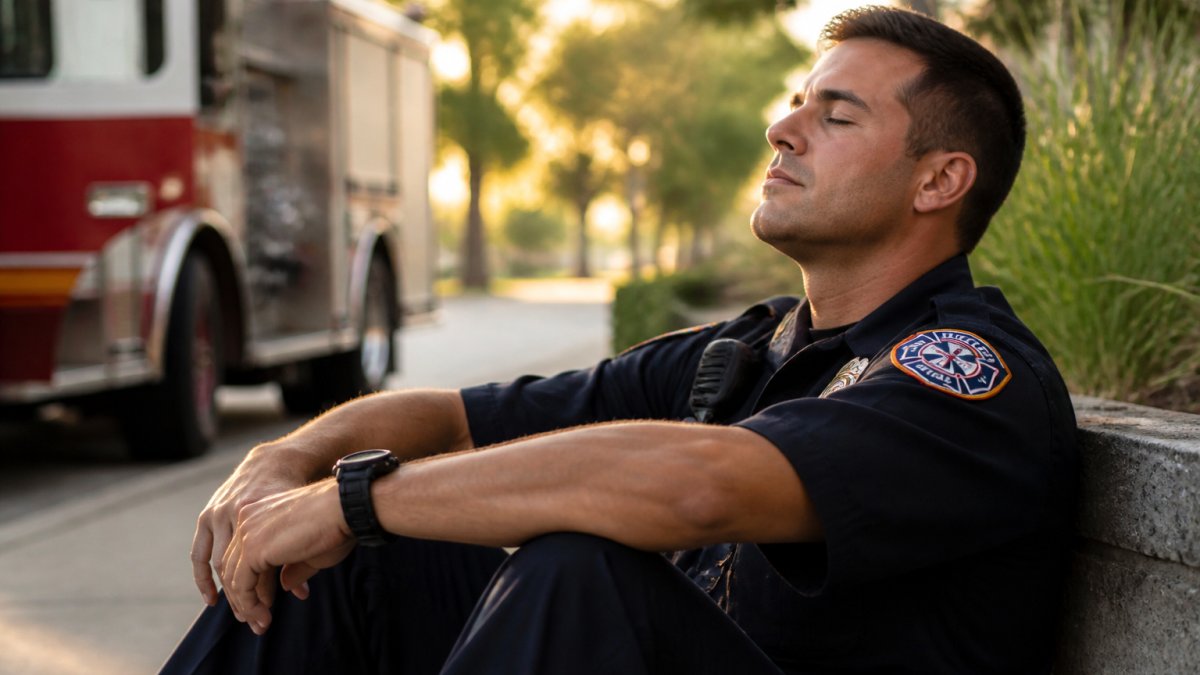
Self-care prevents burnout. It reduces the risk of PTSD and other mental health challenges. It strengthens your resilience, your ability to bounce back from difficult calls and stressful situations.
1. Prioritize Physical Wellness and Exercise
Physical activity is one of the most powerful self-care tools available. Exercise reduces stress, improves sleep quality, and builds the physical endurance your job demands.
The real challenge isn’t knowing exercise is good for you. It’s fitting movement into a schedule that wasn’t designed for it.
Shift-compatible movement strategies:
- Before a shift: 10 minutes of dynamic stretching or a brisk walk primes your body for the physical demands ahead. This isn’t about burning calories, it’s about waking up your nervous system and reducing injury risk.
- During a shift: Use downtime at the station for bodyweight circuits (push-ups, squats, planks, lunges). Even 5 minutes resets your energy. If you’re in a vehicle or at a desk, try seated stretches or isometric holds.
- After a shift: Gentle movement, not intense exercise, helps your body transition out of high-alert mode. A slow walk, light yoga, or foam rolling signals to your nervous system that the threat is over.
- On days off: Prioritize one longer workout or recreational activity you actually enjoy. This isn’t punishment, it’s restoration.
Role-specific considerations:
- Firefighters carry heavy gear and face extreme heat. Focus on grip strength, core stability, and cardiovascular endurance. Recovery matters as much as training.
- EMTs and paramedics spend hours lifting patients and equipment. Protect your back with deadlifts, rows, and core work. Stretch hip flexors and hamstrings regularly.
- Law enforcement officers often sit for long periods, then need explosive movement. Break up sedentary time with walking breaks and mobility work. Strength training supports both foot pursuits and defensive tactics.
- Dispatchers face prolonged sitting and high cognitive load. Standing desks, walking meetings, and neck/shoulder stretches combat the physical toll of desk work.
You don’t need a gym membership to stay fit. A resistance band, a jump rope, and 20 minutes of focused movement can maintain your fitness during busy weeks.
Physical wellness also means paying attention to what you eat. Shift work disrupts hunger cues and makes vending machine food tempting. Pack protein-rich snacks (nuts, jerky, hard-boiled eggs) and stay hydrated. Caffeine can help during night shifts, but timing matters, too much too late wrecks your sleep.
If you’re injured or dealing with chronic pain, don’t push through it. Physical therapy and sports medicine providers understand the demands of first responder work and can help you recover without losing ground.
2. Master Sleep Tips for First Responders Working Shifts
Sleep is where your body repairs itself. It’s where your brain processes stress and trauma. For first responders, sleep is often fragmented and unpredictable.
Shift work disrupts your natural sleep rhythm. You might work nights, then days, then swing shifts. Your body never fully adjusts.
These strategies help:
- Keep your bedroom dark, cool, and quiet, use blackout curtains
- Maintain a consistent sleep schedule even on days off
- Avoid screens 30 minutes before bed
- Limit caffeine after mid-shift
- Use white noise or earplugs to mask station sounds
- Try melatonin if recommended by a doctor
- Sleep when you can, even if it’s not at night
Quality matters more than quantity. Thirty minutes of uninterrupted sleep beats two hours of fragmented rest.
If you struggle with sleep after stressful calls, that’s normal. Difficulty sleeping after potentially psychologically traumatic events is a common stress response. If it persists, talk to a professional.
3. Develop Stress Management for First Responders
Stress management isn’t about eliminating stress, that’s impossible in this work. It’s about processing stress so it doesn’t accumulate and damage your health.
First responders experience job stress that builds over time. Each difficult call adds to the load. Without active stress management, that load becomes overwhelming.
Practical stress management techniques:
- Breathing exercises: Box breathing (4-4-4-4 counts) calms your nervous system instantly
- Progressive muscle relaxation: Tense and release muscle groups to release physical tension
- Journaling: Write about tough calls without judgment, this helps your brain process them
- Talking it out: Debrief with crew members or a trusted friend after difficult shifts
- Hobbies: Spend time on activities you enjoy, they interrupt the stress cycle
- Time in nature: Even 10 minutes outside reduces cortisol (your stress hormone)
Stress management for first responders also means recognizing when stress is becoming unmanageable. If you’re irritable, withdrawn, sleeping poorly, or using substances to cope, those are warning signs that professional support would help.
4. Build Resilience and Coping Skills
Resilience is your ability to experience trauma, stress, or hardship and recover from it. It’s not about being tough or never feeling affected.
Building resilience starts with awareness. Notice how you respond to stress. Do you withdraw? Get angry? Use substances? Understanding your pattern is the first step to changing it.
Develop these coping skills:
- Acceptance: Acknowledge difficult feelings without judgment, they’re normal responses to abnormal events
- Problem-solving: When stress is fixable, take action; when it’s not, practice letting go
- Reframing: Ask yourself what you can learn from a tough call instead of dwelling on what went wrong
- Connection: Spend time with people who understand your work
- Meaning-making: Remind yourself why you do this work and what difference you make
Resilience also means recognizing when coping skills aren’t enough. If you’re struggling with coping after potentially psychologically traumatic events, professional mental health support accelerates recovery and prevents long-term complications.
5. Strengthen Social Support and Family Connection
Isolation amplifies stress and mental health challenges. Connection is protective.
Many first responders struggle to maintain relationships because of shift work and job stress.
Scripts for checking in with colleagues:
You don’t need to pry or force a conversation. Simple, low-pressure check-ins work better than formal debriefs.
- “That last call was rough. You doing okay?”
- “I noticed you’ve been quiet lately. I’m here if you want to talk, no pressure.”
- “I’m grabbing coffee after shift. Want to join?”
- “You don’t have to talk about it, but I’ve got your back.”
The goal isn’t to fix anyone.
Scripts for explaining job stress to family:
Family members often want to help but don’t know how.
- “I had a hard shift. I don’t want to talk about the details, but I’d appreciate some quiet time or a hug.”
- “When I come home and I’m irritable, it’s usually not about you. It’s the job. Give me a few minutes to decompress.”
- “I can’t share everything I see at work, but I want you to know I’m okay and I’m taking care of myself.”
- “Here’s what helps me after a tough day: [specific action, like a walk, a meal together, or just sitting in the same room].”
Role-specific support challenges:
- Firefighters and EMS often bond deeply with their crew, which can make family feel like outsiders. Intentionally including family in station events or explaining crew dynamics can bridge that gap.
- Law enforcement officers may face public scrutiny or community hostility, making it hard to talk about work without feeling judged. Spouses and partners can benefit from understanding the emotional toll of the job.
- Dispatchers often feel isolated because they’re not on scene but still absorb trauma through the radio. Peer support with other dispatchers is critical, and family may need help understanding that the stress is real even if the work looks different.
Building peer support that works:
Many departments offer confidential peer support programs. If yours doesn’t, consider starting one or connecting with regional first responder organizations.
Social support isn’t weakness. Research consistently shows that people with strong social connections recover faster from trauma, experience less depression and anxiety, and live longer. Investing in relationships is investing in your health.
If family relationships are strained by your work, that’s common. Family therapy or couples counseling can help. Salado Creek Mental Health provides personalized support for first responders and their families navigating these challenges. We can get new patients in within a few days and we accept most commercial insurances.
6. Practice Mindfulness and Present-Moment Awareness
Mindfulness is the practice of paying attention to the present moment without judgment. It sounds simple. It’s powerful for managing stress and trauma responses.
First responders often get stuck in their heads, replaying difficult calls, worrying about the next shift, or bracing for the worst.
Simple mindfulness practices:
- Body scan: Slowly notice sensations in each part of your body, this grounds you in the present
- Mindful breathing: Count your breaths or focus on the sensation of air entering and leaving your lungs
- Five senses exercise: Notice 5 things you see, 4 you hear, 3 you feel, 2 you smell, 1 you taste
- Mindful eating: Eat one meal slowly, noticing flavors and textures
- Walking meditation: Walk slowly, paying attention to each step and your surroundings
Start with just 5 minutes. Mindfulness is a skill that improves with practice. Apps like Insight Timer or Calm offer guided sessions designed for busy schedules.
Mindfulness also strengthens self-awareness, your ability to notice warning signs early.
7. Monitor Your Mental Health and Recognize Warning Signs
Regular self-checks are essential. You wouldn’t ignore physical symptoms, don’t ignore mental health warning signs either.
First responders are trained to notice problems in others. Apply that same awareness to yourself.
Warning signs to watch for:
- Persistent irritability or anger
- Withdrawing from friends and family
- Changes in sleep (too much or too little)
- Loss of interest in hobbies you enjoyed
- Increased use of alcohol or substances
- Difficulty concentrating or making decisions
- Feeling hopeless or disconnected
- Intrusive thoughts about difficult calls
- Physical symptoms (headaches, stomach issues, muscle tension)
If you notice these signs, don’t wait. Talk to someone, a trusted crew member, your doctor, or a mental health professional.
Salado Creek Mental Health understands the pressures you face. We provide compassionate, confidential psychiatric care for first responders dealing with stress, anxiety, PTSD, and other mental health challenges.
Taking care of yourself isn’t selfish, it’s essential.
If you’re struggling with stress, sleep problems, anxiety, or the aftermath of difficult calls, professional support makes a real difference.
Frequently Asked Questions
How can first responders manage stress after a difficult call?
After a potentially traumatic call, use grounding techniques like the 5-4-3-2-1 method (name five things you see, four you can touch, three you hear, two you smell, one you taste) to return to the present moment. Talk with a trusted peer or family member about what happened, engage in physical activity to process adrenaline, and allow yourself to decompress before returning home. If intrusive thoughts or emotional numbness persist beyond a few days, reach out to a mental health professional who specializes in trauma exposure and first responder support.
What are the best sleep tips for first responders working irregular shifts?
Maintain a consistent sleep schedule when possible, even on days off. Create a dark, cool sleeping environment using blackout curtains and white noise. Avoid caffeine 6-8 hours before sleep and limit screens 30 minutes beforehand. If you work rotating shifts, try to align sleep timing with your body’s natural rhythm rather than fighting it. Short naps (20-30 minutes) during breaks can help, but avoid long naps that cause grogginess. If sleep issues persist despite these habits, discuss options with a healthcare provider.
How do first responders prevent burnout?
First responder burnout prevention requires a combination of strategies: set clear boundaries between work and personal time, maintain regular physical activity and nutrition, nurture relationships outside of work, and practice stress management techniques like mindfulness or journaling. Recognize early warning signs such as cynicism, emotional exhaustion, or reduced job satisfaction. Build peer support networks and don’t hesitate to seek professional mental health support. Many first responders find that talking openly with colleagues and leadership about workload and difficult calls helps normalize help-seeking and reduces isolation.
When should a first responder seek professional mental health support?
Seek professional support if you experience persistent sleep problems, intrusive thoughts about calls, emotional numbness, increased substance use, difficulty concentrating, or thoughts of harming yourself. You don’t need to wait for a crisis, early intervention is more effective. Many providers offer confidential services and understand the unique pressures of first responder work. If you’re unsure whether you need support, a brief consultation with a mental health professional can help clarify. Remember that seeking help is a sign of strength and professionalism, not weakness.